
Coconut Shell
Nature’s Armor, Endless Uses
The coconut shell is the hard, protective outer layer found between the coconut’s husk and kernel. It is a strong, durable, and naturally water-resistant material, making it highly versatile for various applications. Rich in lignin and cellulose, coconut shells are an excellent source of biomass and are commonly used in handicrafts, activated carbon produc
tion, and as a natural fuel. They can be carved into utensils, decorative items, or even used as an eco-friendly alternative to plastics. Once considered waste, coconut shells are now valued for their sustainability, biodegradability, and wide-ranging uses, contributing to both environmental conservation and economic opportunities.
Types of Coconut Inflorescence
Coconut Shell Powder
Coconut shell powder is an eco-friendly and versatile material derived from the hard outer shell of coconuts, widely used across various industries. Rich in cellulose, lignin, and hemi-cellulose, it also contains small amounts of minerals, proteins, and fibers. The production process involves cleaning dried coconut shells, breaking them into smaller pieces using crushers or grinders, and then finely grinding them into powder. The powder is processed through a cyclone, with the final product collected in bag filters. Depending on its application, the fineness can be adjusted. Finally, it is sifted in a vibrating sieving machine to ensure uniform particle size and remove impurities, making it suitable for industrial uses such as fillers, abrasives, and eco-friendly products.
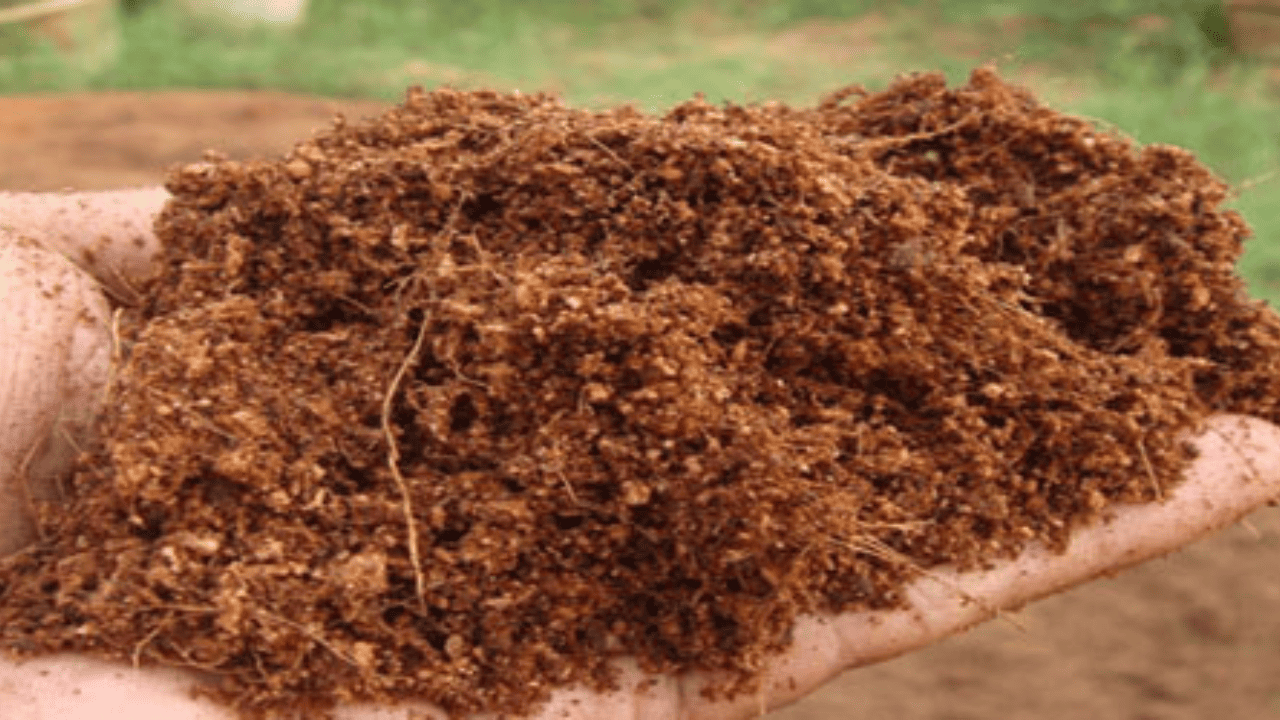
| Parameters | Values |
|---|---|
| Moisture | <10% |
| Volatile Matters | 15% Maximum |
| Ash | <2% Maximum (m/m) |
| Fixed Carbon | 75% Minimum |
| Foreign Matter | 0.5% Maximum |
| Color | Black |
Coconut Shell Charcoal
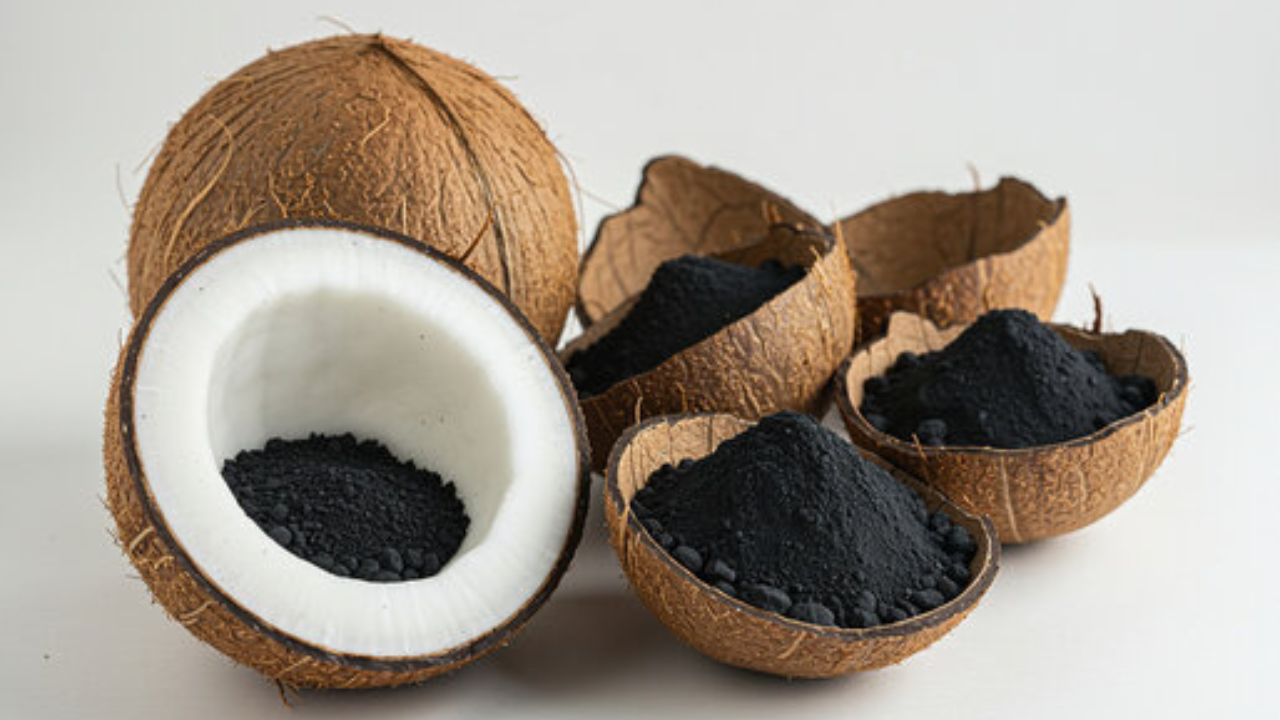
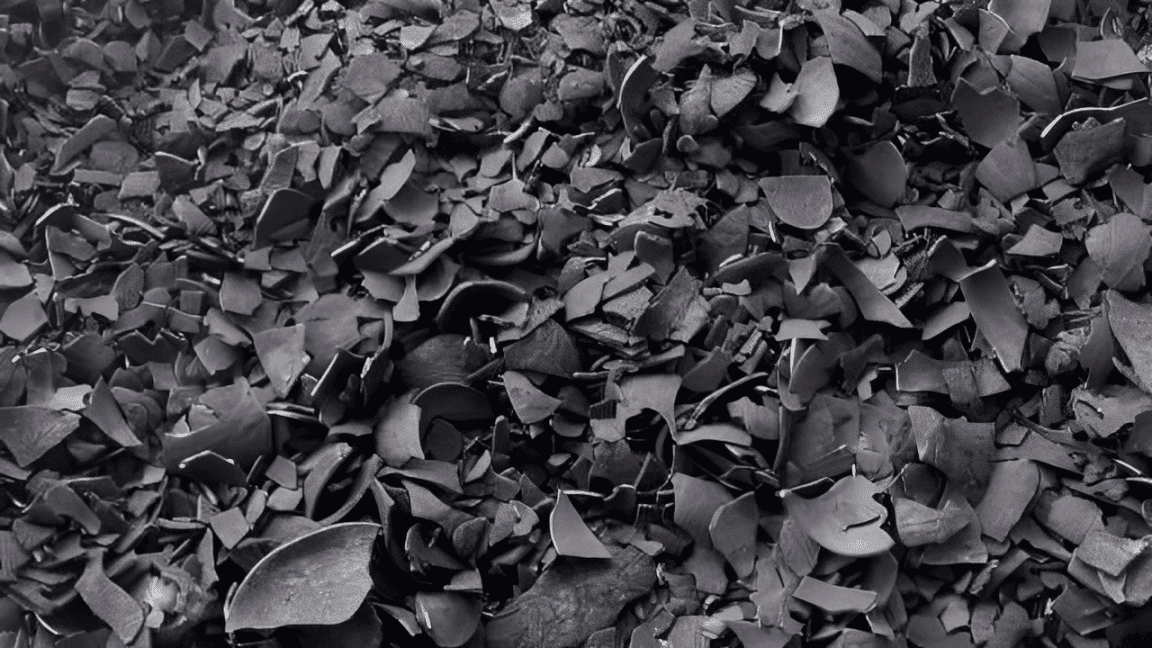
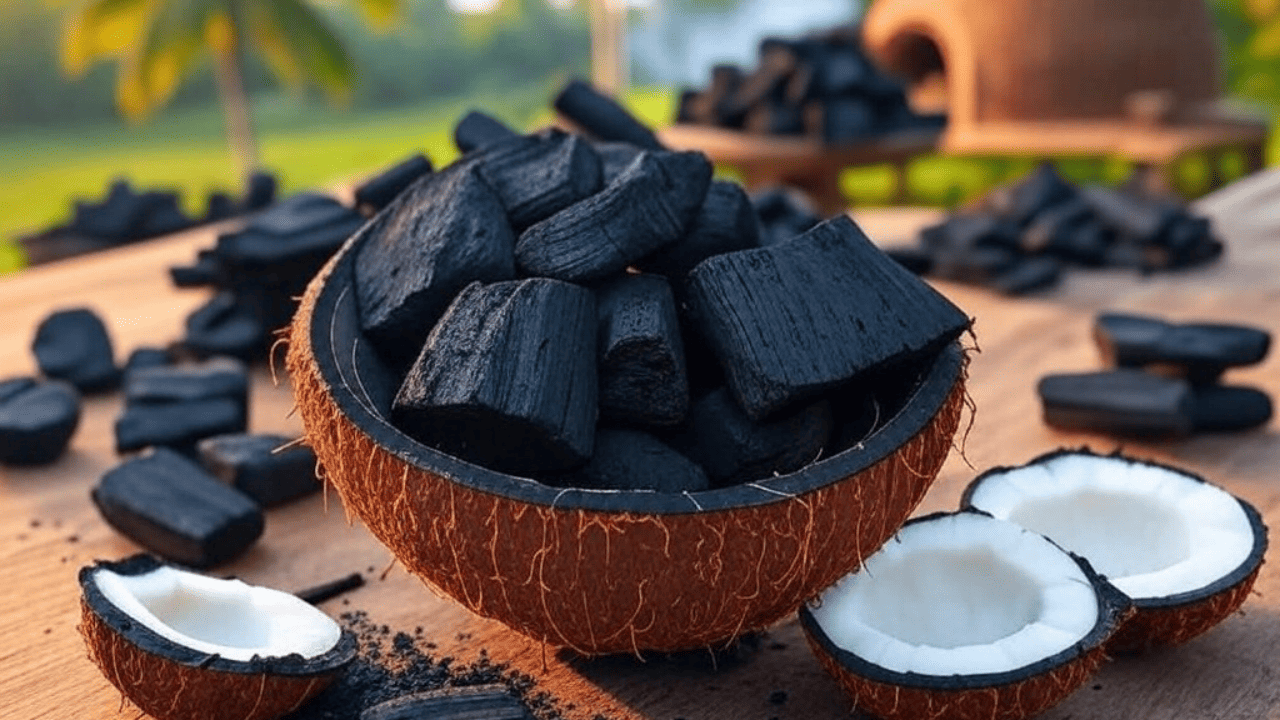
Coconut shell charcoal is an eco-friendly and versatile product made from coconut shells, widely used for cooking, grilling, air and water purification, cosmetics, pharmaceuticals, agriculture, and industrial applications. Known for its high porosity and large surface area, it excels in adsorption, effectively removing impurities and toxins. It burns longer, produces less smoke, and emits minimal odor compared to wood charcoal. Production involves carbonization (pyrolysis), where dried shells are heated in the absence of oxygen at 600–900°C in a kiln or retort. This process removes volatile components, leaving pure carbonized material. The charcoal is then cooled gradually or quenched with water to preserve quality. It is available in two types—pieces (Type I) and granulated (Type II).
Activated Carbon
Activated carbon from coconut shell charcoal is produced through physical or chemical activation, resulting in a microporous structure ideal for adsorbing low molecular weight organic pollutants, especially in water treatment. Production involves two stages: carbonizing coconut shells into charcoal, then activating it with steam at 900–1100°C in a controlled rotary kiln environment. This process enhances internal surface area for greater adsorption efficiency. Operating below 900°C slows reactions and is uneconomical, while above 1100°C causes surface-only reactions and charcoal loss. Activated carbon is available in two forms: powdered, for decolourizing oils, sugar solutions, and pharmaceuticals; and granular, for gas absorption, water purification, solvent recovery, respirators, and catalyst support.
| Parameter | Type 1 | Type 2 | Type 3 |
|---|---|---|---|
| Moisture (% by mass), Max | 15 | 15 | 15 |
| Ash (% by mass), Max | 60 | 40 | 20 |
| Matter soluble in water (% by mass), Max | – | 1.5 | 0.5 |
| Matter soluble in acid (% by mass), Max | 6 | 6 | 2.5 |
| pH | 5 to 8 | 5 to 8 | 6.5 to 7.5 |
| Decolorizing power (mg/g), Min | 50 | 70 | 205 |
| Oil retention (% by mass), Max | 30 | – | – |
| Filterability (minutes), Max | 46 | – | – |
| Particle size (% by mass, Min) passing through ISO-micron IS Sieve | 100 | 100 | 95 |
| Passing through 125-micron IS Sieve | 95 | 95 | 95 |
| Passing through 75-micron IS Sieve | 80 | 80 | 80 |
| Iron (as Fe) (% by mass), Max | – | – | 0.05 |
| Chlorine (as Cl) (% by mass), Max | – | – | 0.35 |
| Sulphate (as SO₂) (% by mass), Max | – | – | 0.8 |
| Cyanogen compounds | – | – | To pass the test |
| Parameter | Type 1 | Type 2 |
|---|---|---|
| Adsorption capacity for carbon tetrachloride (% by mass), Min | 55 | – |
| Moisture (% by mass), Max | 5 | 5 |
| Ash (% by mass), Max | 5 | 0 |
| Hardness number, Min | 90 | 90 |
| Retentivity index (% by mass), Min | 45 | – |
| Adsorption capacity in terms of iodine number, Min | 900 | 450 |
| Half dechlorination value (cm), Max | 4 | 7 |
| Surface area (m²/g), Min | 900 | 550 |
